Tea as a Faithful Companion on the Good Heart Road | Catholic Roads
Discover how simple, heart-friendly teas can become a comforting, faithful companion on life’s journey. A gentle, faith-inspired reflection for living your best life on the Holy Highway.
REFLECTIONSTHE HOLY HIGHWAYTABLE FELLOWSHIP & DAILY BREAD
Rom Webster
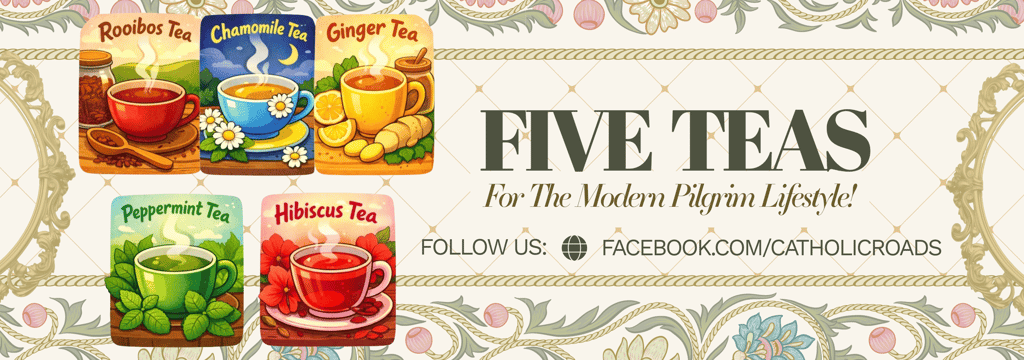
FIVE TEAS: For The Modern Pilgrim Lifestyle
Not Medical Advice…Just Good Sense For Good Living
THERE’S SOMETHING QUIETLY FAITHFUL ABOUT A GOOD CUP OF TEA!
It doesn’t shout promises.
It doesn’t rush results.
It simply shows up—warm, steady, familiar—like a good friend who knows when to speak and when to sit beside you.
Promote A Healthy Lifestyle
For many people, especially those living with heart disease, daily choices can start to feel complicated. Labels get longer. Warnings get louder. Even well-meaning advice can feel like homework. Tea, thankfully, lives in a different neighborhood. When chosen wisely and enjoyed sensibly, it can contribute to a calm, nourishing rhythm for your life.
This isn’t about cures or claims.
It’s about good habits, simple pleasures, and choosing beverages that support a gentler way of living.
The Heart-Healthy Tea Shelf
Below is a short, dependable five-tea shelf—teas that are generally considered safe, familiar, and tea-friendly for everyday enjoyment, especially when heart health is part of the picture.
Rooibos — The All-Day Companion
Rooibos comes from South Africa, but it feels right at home anywhere a kettle lives. Naturally caffeine-free and smooth, it has a mild sweetness that doesn’t need sugar to be friendly.
It’s the kind of tea you can sip in the morning, return to in the afternoon, and still enjoy in the evening. Rooibos doesn’t push or pull—it simply accompanies your day.
Think of it as the tea equivalent of a comfortable chair.
Chamomile — The Evening Friend
Chamomile has been calming people down since long before stress had a name. Light, floral, and soothing, it’s often associated with rest and winding down.
For those living with heart concerns, evenings matter. Good sleep matters. Chamomile earns its place as a gentle way to signal that the day is easing to a close.
This is the tea that lowers the lights without touching the dimmer switch.
Ginger — The Helpful One
Ginger tea has a warming quality that feels reassuring rather than stimulating. It’s long been used for digestion and general comfort, especially after meals.
As a tea, ginger tends to be practical and grounding. It doesn’t pretend to fix everything—it just helps things along.
The friend who shows up early and stays useful.
Peppermint — The After-Supper Favorite
Bright, refreshing, and familiar, peppermint tea is often enjoyed after meals. Its clean taste feels like a deep breath for the digestive system.
For many people, peppermint becomes part of an evening routine—something light, pleasant, and easy to enjoy without adding caffeine or heaviness late in the day.
The tea that straightens the kitchen before heading to the porch.
Hibiscus — The Lively One
Hibiscus tea brings color and character to the shelf. Tart and cranberry-like, it’s refreshing hot or iced and adds a little spark to the day.
It’s often associated with heart-aware lifestyles and is enjoyed by people who want flavor without relying on sweetened drinks.
The cheerful friend who brings a little brightness without overstaying.
Using Tea the Sensible Way
A heart-friendly tea habit doesn’t need rules carved in stone. A few gentle guidelines usually do the trick:
Stick to tea, not concentrated supplements
Rotate varieties instead of overdoing one
Let tea support your day—not manage it
If it feels calming, comforting, and familiar, you’re likely on the right track
Tea works best when it’s part of a larger, healthier lifestyle—alongside decent food, movement, rest, and a little grace for yourself.
A Final, Friendly Thought
Many people believe that tea can contribute to good health when enjoyed as part of a healthy lifestyle. That may well be true. But tea doesn’t need a medical résumé to earn its place.
Sometimes it’s enough that tea is simply a good beverage—one that inspires loyalty the same way some people swear by their favorite wines, beers, or chocolates.
Tea asks very little.
It offers warmth, flavor, and familiarity.
And for many living with heart disease, that makes it not just a drink—but a friend.
Our Story
That’s our story, folks, and we’re sticking to it! Especially when it comes to good tea and a great, pilgrimage lifestyle.